
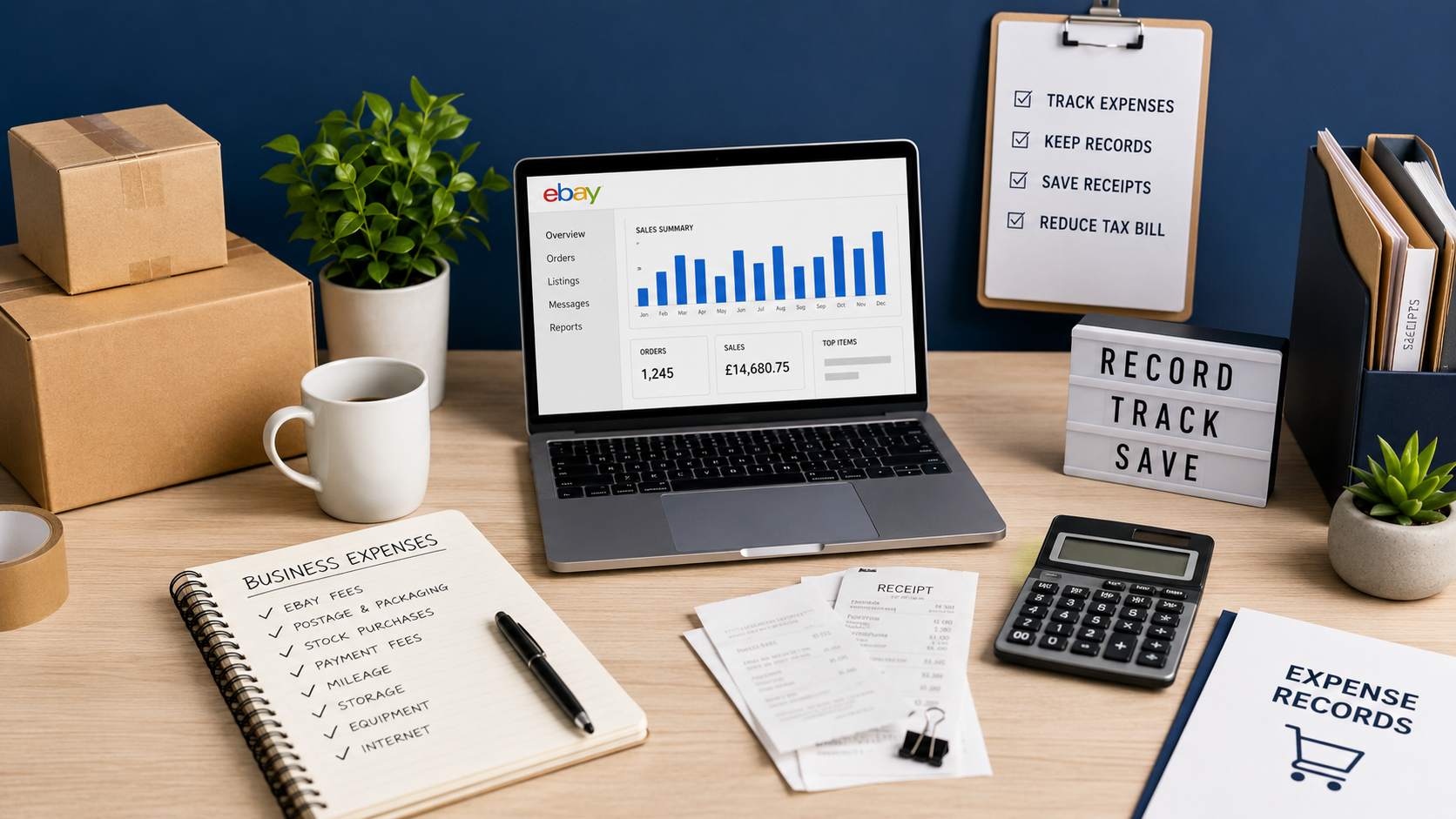

A lot of eBay sellers leave money on the table every tax year simply because they do not record their business expenses properly. Whether you are selling as a side income or running a full-time eBay operation, the expenses you incur in the course of that business are generally deductible against your taxable income. Getting this right can make a meaningful difference to what you owe HMRC at the end of the year.
What Counts as an Allowable Business Expense for eBay Sellers?
HMRC allows you to deduct expenses that are incurred wholly and exclusively for business purposes. For eBay sellers, this covers a wide range of costs that many sellers overlook or record incorrectly. ebay seller accountants are well placed to help you identify every legitimate deduction and make sure it is categorised correctly.
Common allowable expenses for eBay sellers include:
- eBay selling fees, including final value fees and listing upgrades
- PayPal or payment processing fees charged on each transaction
- Postage and packaging costs, including envelopes, boxes, and packing tape
- Cost of goods purchased for resale, including any import duties or shipping costs from suppliers
- Mileage when driving to collect stock or visit the post office
- A proportion of your home internet costs if used for the business
- Storage costs if you rent space to hold your stock
- Photography equipment or editing software used for product listings
The Importance of Keeping Records
Claiming expenses is only possible if you can evidence them. HMRC expects sellers to keep records of all income and expenditure relating to the business, and those records need to be retained for at least five years after the Self Assessment filing deadline for the relevant tax year.
For eBay sellers, good record-keeping means:
- Saving all receipts for stock purchases, whether physical or digital
- Keeping a record of every eBay sale, including the date, item, and amount received
- Logging mileage if you claim vehicle expenses
- Retaining bank statements that show business-related transactions
Cloud accounting software makes this considerably easier than maintaining paper records, and many platforms can be connected directly to your bank account to import transactions automatically.
How to Handle Expenses That Are Part Personal, Part Business
Some expenses are not exclusively for business use. Your home internet connection, for example, is probably used for personal browsing as well as managing your eBay store. In these cases, you can claim a reasonable proportion of the cost rather than the full amount.
The proportion needs to be calculated on a defensible basis. For internet costs, this might be based on the number of hours spent on business activity versus personal use. For a vehicle, you would typically use actual business mileage as a proportion of total mileage for the year. An experienced ecommerce tax accountant will advise you on the most appropriate method for each type of mixed-use expense.
When Does an eBay Side Hustle Become a Business?
This is a question that catches a lot of casual sellers off guard. HMRC draws a distinction between selling personal possessions and running a business for profit. If you are regularly buying items with the intent to sell them at a profit, HMRC is likely to treat that as a trading activity, regardless of whether you think of it as a side hustle or a hobby.
Once your income from eBay exceeds 1,000 pounds in a tax year, you are generally required to declare it and may need to register for Self Assessment. Above that threshold, the ability to deduct business expenses against your income becomes increasingly valuable.
The Role of a Specialist in Getting Expenses Right
The difference between recording expenses correctly and incorrectly can be hundreds or thousands of pounds in tax. A specialist who works with eBay sellers, including Shopify accountants serving ecommerce businesses across multiple platforms, knows the specific expenses that are commonly overlooked, the HMRC rules around what is and is not deductible, and the record-keeping standards that will protect you in the event of an inquiry.
Frequently Asked Questions
Can I claim the cost of goods I bought before I started selling on eBay?
In some cases, yes. If you purchased items with the intention of reselling them and are now selling them through eBay, the cost of those goods may be claimable as part of your cost of sales. This is worth discussing with a specialist to make sure it is handled correctly.
Do I need to register for VAT as an eBay seller?
You need to register for VAT once your taxable turnover exceeds the current UK threshold in any rolling 12-month period. For most smaller eBay sellers, this is not immediately relevant, but it is important to monitor turnover as the business grows.
What is the best way to separate my eBay business expenses from personal spending?
Opening a dedicated business bank account is the simplest approach. Running all business income and expenditure through a separate account makes record-keeping far more straightforward and reduces the risk of missing deductible expenses.